Move an Imported Chinese EV from Port to Workshop
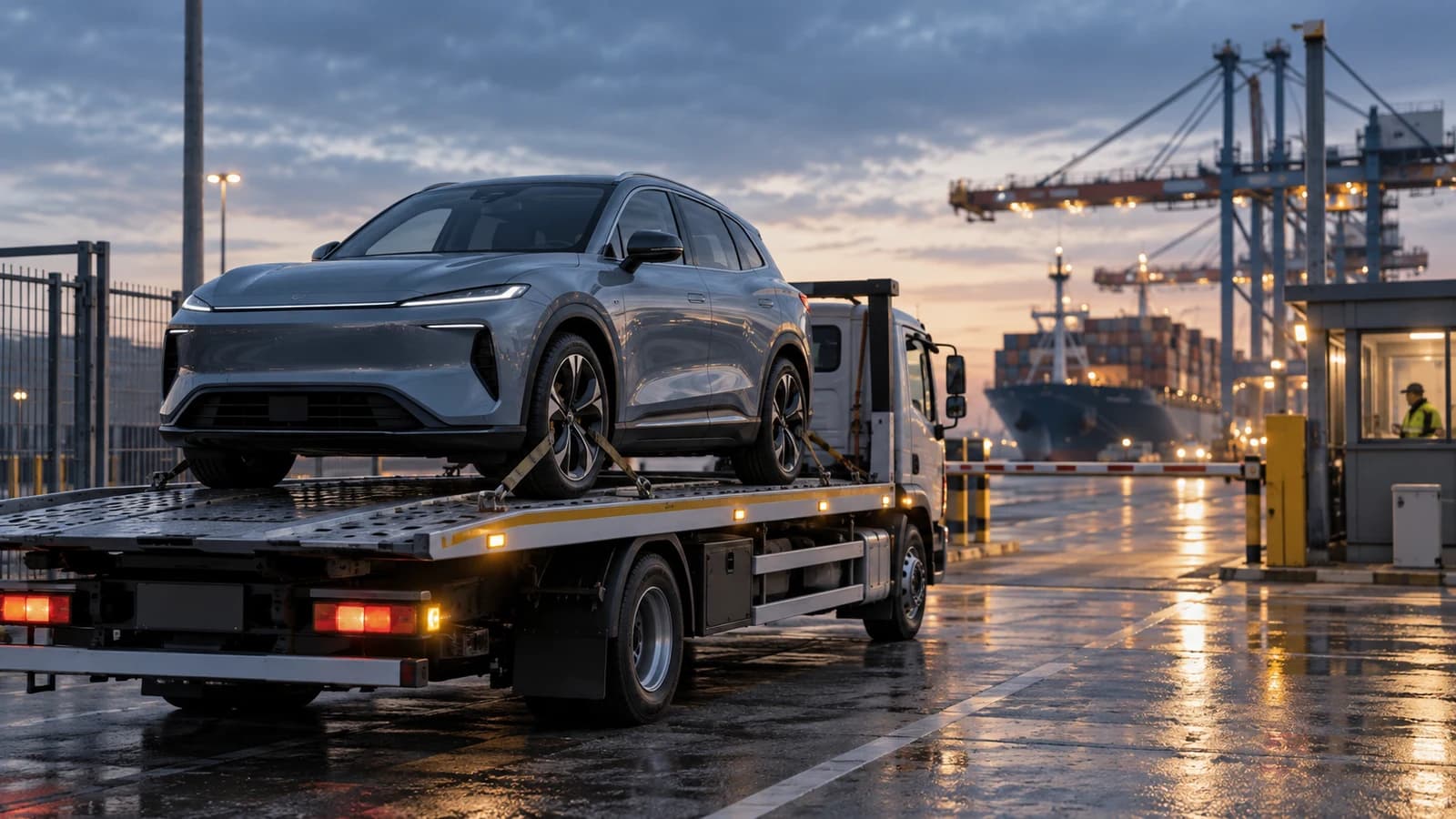
Direct answer. Arrange the port-to-workshop movement of an imported Chinese EV before the vessel arrives. Confirm release documents, an authorized transporter, safe manufacturer-specific loading instructions, insurance responsibilities and a receiving appointment. Port release does not by itself authorize a road journey, and an unfamiliar EV should not be moved using an assumed universal towing method.
Key takeaways
- Keep customs release, terminal release and road eligibility separate.
- Identify the actual car and disclose relevant condition information.
- Obtain transport instructions from competent sources.
- Book the receiving workshop and its access requirements in advance.
- Preserve condition evidence at both ends of the movement.
Draw the movement boundary
The shipment may be delivered to a terminal rather than your final workshop. Identify exactly where the freight contract ends and who arranges the next leg. A phrase such as delivered to port can leave collection, loading and inland transport outside the quoted service.
Ask the broker and forwarder what release steps apply to the booked shipment. Payment of one invoice is not proof that every authority and terminal has authorized collection. Keep an identified contact for each unresolved release condition rather than telling the transporter to resolve everything at the gate.
Separate those steps from permission to use the car on public roads. UK import guidance, for example, describes approval and registration stages that are distinct from shipping. Buyers elsewhere need the relevant local rules. Do not drive from the port because the keys were handed over or because a similar vehicle is already registered locally.
Give the transporter a vehicle-specific brief
Provide the VIN, dimensions and other requested booking information through authorized channels. Ask what evidence the transporter needs to choose appropriate equipment and a loading plan. Avoid making technical assumptions from photographs of an unrelated trim.
Disclose known damage, warning conditions or specialist instructions that could affect handling. If a qualified provider says the vehicle requires a particular assessment before movement, resolve that requirement before collection. Do not conceal a problem to preserve the booking or ask the driver to make an improvised safety decision.
The correct manufacturer information should guide loading and handling. This article does not prescribe towing points, battery isolation, neutral-mode procedures or tie-down methods. EV configurations differ, and a general internet checklist should not override the competent transporter's approved plan.
Reconcile the collection file
| Item | Responsible confirmation |
|---|---|
| Vehicle identity | Seller, shipping record and collector |
| Customs status | Appointed broker or relevant authority |
| Terminal collection permission | Forwarder or terminal process |
| Transport acceptance | Booked professional transporter |
| Safe handling instructions | Competent vehicle-specific source |
| Receiving appointment | Workshop contact and site access owner |
Maersk's delivery-order guidance illustrates that changes to release arrangements follow carrier-specific processes. It is not the procedure for every terminal or ocean carrier. Ask your forwarder for the actual process and any required amendments before a truck is dispatched.
Book a workshop that can receive this vehicle
Confirm that the workshop accepts the actual model and the planned task. A business that services local EVs may not have the information, tools or authorization needed for a Chinese-market import. Ask about the initial assessment, diagnostic access and any limitations before arranging delivery.
Provide the inspection and condition records that the workshop is authorized to receive. State which findings are confirmed and which are only seller descriptions. The workshop should not discover a known material issue only after the vehicle is unloaded and the transporter has left.
Check practical receiving details: the appointment, site access, available space, unloading responsibility and an after-hours contingency. If the vessel schedule changes, notify the workshop and transporter together. A cleared terminal collection without an available destination can create another storage problem.
Define insurance and condition evidence
Ask the relevant insurers or advisers which cover applies to the inland leg and what conditions or disclosures they require. Cargo insurance descriptions can illustrate the questions, but only your actual policy establishes the agreed scope. Do not assume that ocean freight cover automatically continues through every later movement.
Have authorized personnel record visible condition at collection and receipt. Link the observations to the VIN, location and time. Photographs can preserve a handover comparison; they do not certify every mechanical or electrical system and should not require unsafe access to the car.
If damage is noticed, follow the applicable notification and evidence process promptly. Avoid admitting liability or making unsupported accusations based only on the first photograph. Preserve original files and request a qualified assessment where the condition requires it.
Plan the failed-collection scenario
Before the truck departs, ask what happens if release is incomplete, the terminal cannot load the vehicle, or the receiving workshop becomes unavailable. Identify who authorizes waiting, redelivery or a suitable temporary location and who confirms the associated charges.
A contingency estimate should distinguish transport waiting time from terminal storage or other shipment charges. Different contracts may define these costs differently. The buyer needs a clear explanation of the applicable terms, not one combined number presented as unavoidable.
Use the port-arrival checklist for the release sequence and the workshop support plan for destination capability. Keep the final transport brief with the handover records so that a later reviewer can understand who controlled each stage.
Confirm the dispatch decision
Use one agreed dispatch contact to reconcile the release and receiving confirmations before authorizing the inland leg. If either confirmation changes, tell every affected party and record the new instruction. A transporter should receive one current brief rather than conflicting messages from the buyer, broker and seller. Keep the earlier version for the transaction history, but label it superseded so it cannot accidentally trigger a second collection.
Frequently asked questions
Can I simply drive the EV away from the port?
Only if the relevant legal, insurance and safety conditions permit it. Port release alone is insufficient. Obtain destination-specific advice for the actual vehicle and journey.
Is a flatbed automatically suitable for every imported EV?
Equipment selection and loading require a vehicle-specific professional assessment. Do not assume that any available truck can safely handle the car.
What if collection is delayed after the transporter arrives?
Use the agreed escalation route. Record the unresolved condition and obtain authorization for the next step instead of letting the driver improvise commercial or technical decisions.
Sources
- GOV.UK: importing vehicles — UK-specific approval and registration context.
- Maersk: amend delivery order or container release — carrier-specific release arrangements.
- U.S. DOE: electric vehicle maintenance — general professional maintenance context.