Chinese EV Odometer Evidence Before Purchase
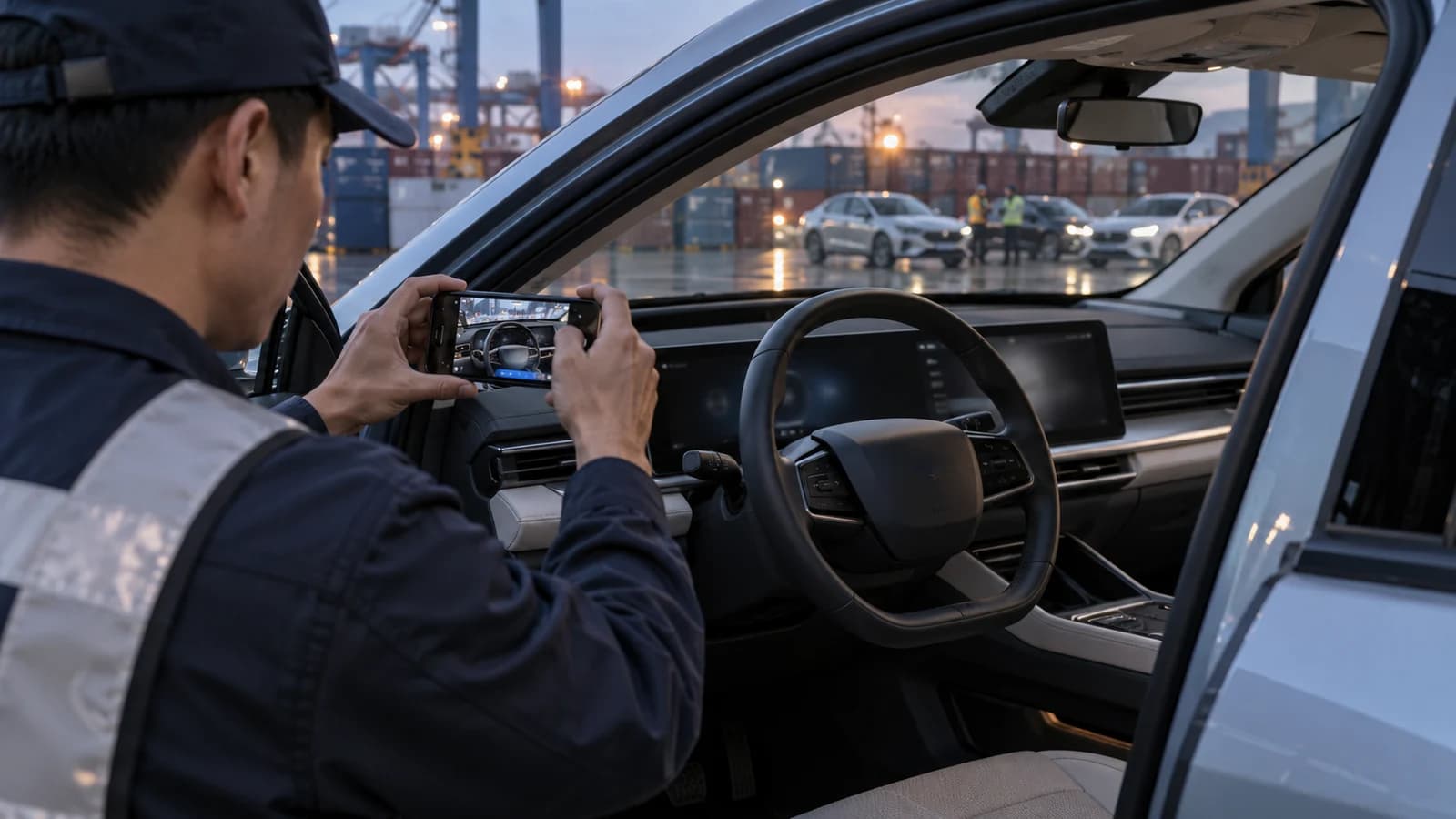
Direct answer. Assess a used Chinese EV's recorded mileage as an evidence timeline, not as a single dashboard photograph. Compare dated readings with vehicle identity, service records and available authorized history, and preserve unexplained gaps without claiming that mileage alone establishes battery health or condition.
Key takeaways
- Match each reading to the correct vehicle and observation date.
- Keep kilometers and miles explicit.
- Ask about instrument replacement and documented corrections.
- Treat inconsistent records as questions requiring qualified investigation.
- Inspect vehicle condition and battery evidence separately from mileage.
Start with the displayed reading and its limits
Request an authorized current observation of the actual vehicle's display. Record the date, vehicle identity and unit. A photograph in an advertisement may be old, cropped or associated with another car. A live video can add context but still does not establish the complete historical record.
Do not confuse trip distance with the lifetime reading. Ask the seller or authorized inspector to identify which field is being shown. The exact display differs by model. Buyers should not attempt to alter instrument settings or connect unapproved diagnostic equipment simply to obtain a reading.
This guide is a record-building method, not a forensic determination about an individual vehicle. Suspected manipulation or a material dispute should be examined by qualified professionals under the relevant jurisdiction's procedures.
Build the mileage timeline
| Record | Information to preserve |
|---|---|
| Current observation | Vehicle identity, date, reading and unit |
| Service document | Issuer, work date and recorded mileage |
| Inspection record | Inspection scope and reading source |
| Historical registration or test | Jurisdiction and coverage limitations |
| Instrument replacement | Authorized explanation and supporting work record |
| Seller statement | What is claimed and what remains unverified |
Do not merge a supplier's summary into the original record without labeling it. A spreadsheet can organize evidence, but the underlying documents still need authenticity and scope checks. Keep originals where appropriate and avoid unnecessarily sharing personal information contained in past service records.
Order the readings by the actual event date, not the date the seller emailed the file. A later-issued copy may describe an earlier service. Missing dates or units should remain unresolved until clarified rather than being filled with a convenient assumption.
Interpret inconsistencies carefully
A lower later reading can raise a question, but a unit change, instrument replacement or data-entry error may require examination. Ask for the authorized explanation and supporting records. Do not conclude fraud from a mismatch alone, and do not accept an unsupported explanation merely because it sounds plausible.
Mileage progression that looks normal is not proof that all records are genuine. Several copied readings can agree with one another. Cross-check independent sources where available and let the qualified inspector explain which observations it could actually verify.
NHTSA's odometer-fraud guidance provides U.S. consumer context for comparing readings and records. It does not establish Chinese export procedures or confirm the history of your car. Use its general evidence rationale while obtaining jurisdiction-specific professional advice for an actual concern.
Use history tools only within their coverage
An official test-history service can provide useful readings for the vehicles and periods it covers. GOV.UK's MOT-history service, for example, describes mileage recorded at qualifying UK tests. It is not a database of every Chinese-market vehicle's earlier life.
A newly imported EV may have little or no destination test history. That absence does not prove a clean past or establish manipulation. Record the coverage gap and seek relevant origin-side evidence through authorized parties. Do not present a blank search result as a positive inspection finding.
Paid history services can also have incomplete data. Ask what sources, jurisdictions and time periods a report covers. The report's branding should not override a limitation stated in its methodology. If it contains no mileage record, write 'no record supplied within this coverage,' not 'mileage verified.'
Mileage is not battery condition
The odometer measures a particular usage record, not every factor affecting the vehicle. Battery condition can depend on more than distance, and a dashboard range estimate is not a full battery assessment. Ask qualified professionals for the appropriate manufacturer-specific condition evaluation.
General U.S. Department of Energy maintenance guidance points buyers toward manufacturer information and relevant professional checks. It does not supply a universal battery-health threshold for a used Chinese EV. Keep technical findings separate from the mileage timeline so that one reassuring number does not conceal another unresolved question.
A low-mileage vehicle can still have storage, repair or damage concerns. Conversely, a higher reading does not automatically make a car unsuitable. The purchase decision should consider documented condition, destination eligibility, support and the agreed intended use rather than a mileage ranking alone.
Put the statement into the purchase record
Ask what the seller is actually representing about the mileage and what qualifications appear in the agreement. A phrase such as low mileage is less precise than an identified reading and its verified scope. Have qualified advisers review material representations and remedies instead of assuming a marketing description creates a particular legal protection.
If a discrepancy is resolved before purchase, preserve the explanation and source evidence. Do not remove the original question from the file as if it never existed. A later insurer, workshop or buyer may need to understand why the documents contain different figures.
At delivery, compare the received vehicle's current reading with the agreed record and explain ordinary transport-related movement where relevant. Do not expect perfect equality without understanding the handover process, but require authorized explanation for a material unexplained difference.
Write a bounded conclusion
A defensible report says which readings were compared, whether they were consistent and which periods remained unverified. Avoid 'true mileage certified' unless an appropriately authorized professional actually provides that finding with a clear scope.
Use the vehicle-history checklist for the broader record and the battery-health report guide for the separate technical question. Together they support a clearer purchase assessment than a single attractive dashboard photograph.
Frequently asked questions
Does a low reading prove the battery is healthy?
No. Mileage and battery condition are separate evidence questions.
Does no history result mean the car has no problems?
No. It may mean the service does not cover that vehicle or period. Preserve the data gap.
Can I diagnose odometer manipulation myself from photos?
Photos can identify questions, but a material conclusion requires qualified examination and relevant records.
Sources
- NHTSA: odometer fraud — U.S. consumer evidence context, not a determination about your vehicle.
- GOV.UK: MOT history — coverage is limited to the described UK testing records.
- U.S. DOE: EV maintenance — general manufacturer-specific maintenance context.