Used Chinese EV Flood Damage: Inspection Questions
Direct answer. Before buying a used Chinese EV, commission an independent, appropriately qualified inspection for possible flood exposure and ask for the vehicle's documented history. No photograph, clean interior or single history report can guarantee that a car was never flooded. Suspected battery exposure requires professional safety assessment, not a buyer's experimental charge or test drive.
Key takeaways
- Identify the actual car and the scope of the available history.
- Ask an inspector to investigate evidence rather than certify a marketing claim.
- Keep high-voltage assessment separate from cosmetic condition.
- Do not operate or charge a vehicle when professionals advise against it.
- Resolve destination approval, insurance and support before committing to the purchase.
Establish what the seller is claiming
Ask whether the seller is representing that the vehicle has never experienced flooding, that no flood damage was found during a specified inspection, or simply that the interior has been cleaned. Those statements have different evidential meanings. Request the wording in the purchase record and obtain qualified advice about any material representation.
Collect the VIN, ownership history available through authorized channels, previous repair records and the dates of each document. A history report with no flood entry may have limited geographical coverage or incomplete reporting. Record those limits instead of translating the result into a clean-history certificate.
The FTC's consumer guidance explains why buyers should examine flood-damage concerns and vehicle history carefully. Its U.S. context does not establish Chinese title rules or destination import eligibility. Use it to frame questions, then have the relevant local professionals assess the actual transaction.
Define the independent inspection
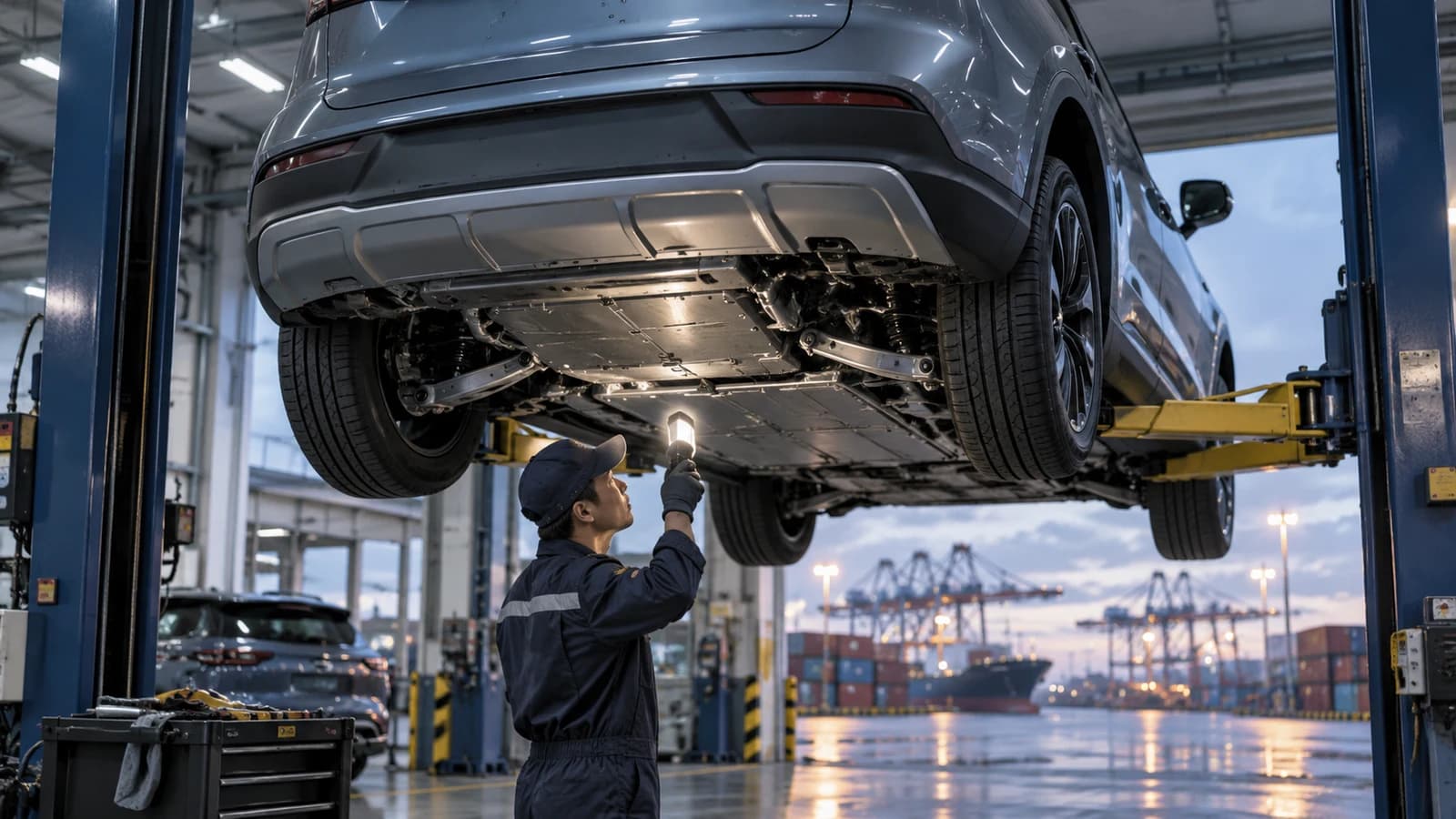
Choose an inspector with relevant EV experience and a clear procedure for refusing unsafe work. Ask what it can inspect without dismantling, what requires an authorized workshop, and which conclusions it cannot support. A general visual inspection is not automatically a high-voltage battery assessment.
Request observations tied to specific locations and dated photographs where appropriate. Evidence of moisture, sediment, corrosion or unusual repairs may warrant further investigation, but buyers should not treat any one observation as a definitive diagnosis. The inspector must explain the combination of findings and its confidence within the agreed scope.
Do not instruct the seller to erase warning codes, deep-clean suspect areas or replace components before the independent inspection simply to improve the presentation. Such work may remove useful evidence. If remedial work is necessary for safety, preserve the earlier record and obtain the authorized explanation.
Ask these questions before anyone moves the car
| Question | Evidence or next step |
|---|---|
| Has water exposure been reported? | Obtain the seller's statement and supporting history |
| Are there unexplained repairs? | Request dated work records and component identification |
| Is high-voltage assessment required? | Ask an appropriately qualified EV professional |
| Can the vehicle be transported safely? | Obtain instructions from the competent responder or carrier |
| Will the destination accept it? | Ask the approval authority or qualified adviser |
| Does insurance cover the intended transaction? | Confirm the applicable policy conditions with the insurer |
A logistics provider's willingness to accept a booking is not proof of technical safety or roadworthiness. Give authorized parties accurate condition information and follow their acceptance procedures. Never conceal a suspected issue to preserve a shipping slot.
Respect the battery safety boundary
NHTSA's electric and hybrid vehicle guidance warns that damaged high-voltage batteries can present serious hazards. Its flood-related guidance should be read alongside the appropriate manufacturer's instructions and the advice of emergency responders or qualified personnel. Do not extrapolate one model's procedure to another Chinese-market variant.
This article does not provide a battery isolation, dismantling, drying or repair method. Buyers should not open a pack, improvise electrical tests, connect a charger to see whether the car works, or attempt to tow it using an assumed universal procedure. A car that powers on can still require specialist investigation.
If warning signs or professional findings raise a safety concern, stop the purchase demonstration and obtain competent direction. Preserve the information remotely where possible without approaching, operating or handling an unsafe vehicle. The responsible professional should determine the appropriate transport and storage arrangements.
Separate repairability from purchase suitability
A repair proposal should identify its scope, authorized provider, parts, verification and remaining limitations. A general promise to replace affected parts does not establish that all damage is understood. Ask what evidence supports the diagnosis and what checks will follow the work.
The buyer also needs a destination-side decision. A vehicle could be technically repairable yet unsuitable for the planned registration route, insurance arrangement or resale expectations. Do not let the availability of a repair quotation substitute for confirmation from the relevant destination parties.
For a UK transaction, official vehicle-import guidance describes approval and registration stages. It does not decide whether a particular damaged EV will qualify. Other countries use their own procedures. Specify the destination early so that advisers can investigate the correct route before the vehicle is shipped.
Build a purchase decision file
Keep the seller's statement, original history reports, inspection scope, findings and specialist recommendations together. Label unresolved questions explicitly. If the decision is to decline the vehicle, the file should explain which unanswered issue mattered rather than accuse a party without sufficient evidence.
If further investigation clears a concern within a defined scope, preserve both the original observation and the later explanation. Deleting the earlier question creates a misleading record. Any decision to proceed should state what was verified, which uncertainties remain and who accepted them.
Use the used-vehicle history guide to organize provenance and the pre-shipment inspection checklist to distinguish condition checks from export paperwork. Neither checklist replaces a specialist assessment of suspected flood exposure.
Frequently asked questions
Does a clean history report rule out flood damage?
No. Coverage and reporting can be incomplete. Ask what jurisdictions, periods and events the report covers, and retain the missing information as a limitation.
Can the seller prove safety by charging the car?
Charging is not a universal diagnostic test. If damage is suspected, competent professionals must decide what operations are safe and what assessment is required.
Is a repaired flood-exposed EV automatically importable?
No. Technical condition, transport acceptance, destination approval and insurance are separate questions. Obtain decisions from the relevant parties for the identified vehicle.
Sources
- NHTSA: hurricane and flood-damaged vehicles — U.S. consumer safety context; not a vehicle-specific diagnosis.
- NHTSA: electric and hybrid vehicles — safety information, not a buyer repair procedure.
- FTC: buying a flood-damaged car — history and inspection considerations in a U.S. context.
- GOV.UK: importing vehicles — UK-specific import stages.