Chinese EV Container Seals: Record the Handover
Direct answer. A container-seal record for a Chinese EV should connect the physical seal, container, vehicle and authorized handover. A seal number written on a document is useful evidence, but it does not by itself prove the vehicle's condition or explain every legitimate opening during the journey.
Key takeaways
- Match the actual seal and container to the correct shipment record.
- Record authorized openings and replacement seals where applicable.
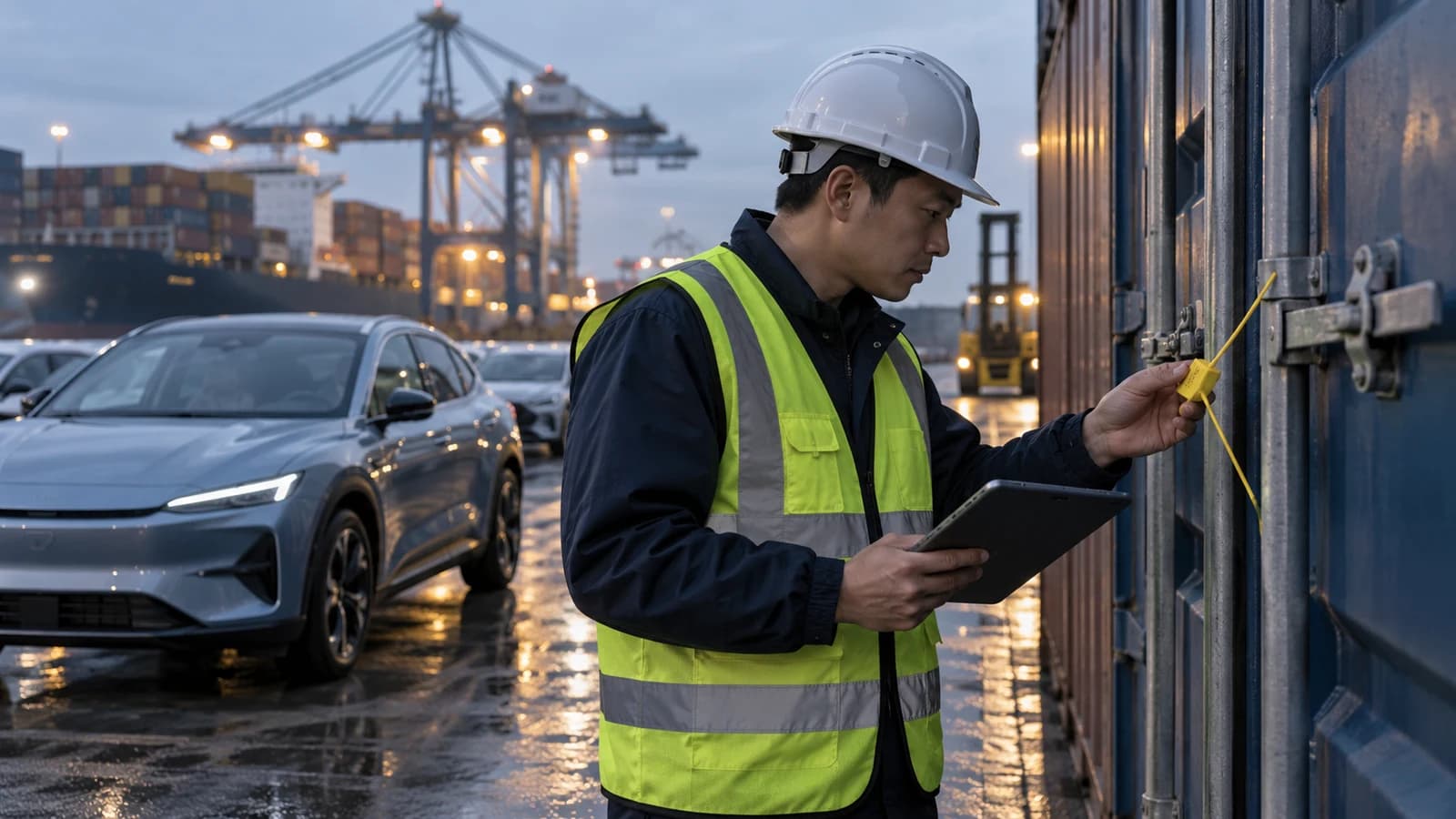
- Photograph permitted observations without interfering with terminal procedures.
- Treat a mismatch as a question requiring investigation, not automatic proof of theft.
- Keep seal evidence alongside loading and delivery condition records.
Establish what your transport arrangement includes
Not every vehicle journey gives the buyer direct access to a container seal. A shared container, managed consolidation or other arrangement may place the record with the forwarder. Ask who records sealing and who can provide the relevant evidence. Do not invent a buyer responsibility that conflicts with the contracted handling process.
Confirm the container and shipment reference before looking at the seal number. A clear photograph of a seal on the wrong container is not useful evidence for your EV. If multiple vehicles are loaded together, ask how the loading record connects each vehicle identity to that equipment.
This article is an evidence-planning guide. It does not prescribe seal standards, customs inspection procedures or legal liability. The carrier, terminal and authorized public authorities control their actual processes, and qualified advisers should assess a material dispute.
Create a handover record
| Field | What to record or request |
|---|---|
| Equipment | Container reference associated with the booking |
| Vehicle | Vehicle identity in the loading record |
| Seal | Observed identifier and the document version |
| Event | Sealing, authorized opening or replacement |
| Custody | Responsible party at the relevant handover |
| Evidence | Permitted photograph, receipt or confirmation |
Ask whether the identifier is observed directly or copied from another document. Both may have a role, but they are different evidence sources. Keep the date and responsible recorder clear. A later spreadsheet reconstruction should not be presented as a contemporaneous physical observation.
Use the smallest necessary sharing scope. Seal records may include shipment information and commercial references. People arranging transport need the relevant details, but unrelated recipients do not need the full document pack. Avoid posting live logistics identifiers publicly as a way to crowdsource verification.
Document an authorized opening
A container may be opened under an authorized procedure during the journey. Ask the contracted provider how it records the event and any replacement seal. Do not assume that a changed number always indicates unauthorized access. Equally, do not dismiss a mismatch without obtaining the explanation and available evidence.
Record the original number, new number where applicable, event date and the party responsible for the opening. The exact records available depend on the process. If an official inspection occurred, let the authorized parties provide the relevant confirmation instead of asking a driver to create a substitute statement.
Keep the shipping record aligned. Maersk's shipping-instruction amendment guidance illustrates that document corrections have a managed process. Its published fee conditions also distinguish particular updates. These are carrier-specific examples; verify how your provider handles a seal update and whether any related records need confirmation.
A seal does not inspect the vehicle
An intact recorded seal can support a custody discussion, but it does not tell you whether the EV was properly loaded, secured or already damaged before sealing. Keep loading-condition photographs and the vehicle identification separately. Do not treat a seal as a substitute for a qualified pre-shipment inspection.
Similarly, a broken or mismatched seal does not establish exactly what happened to the car. The final vehicle condition, authorized openings and handover chain need examination. Record observations and questions rather than writing an unverified accusation into the delivery report.
Safety still controls access. Buyers should not climb on equipment, interfere with locks or open containers outside the authorized procedure. If an EV may be damaged or unsafe, qualified personnel should manage inspection and handling. Evidence collection is not permission to bypass terminal or vehicle-safety rules.
Handle a mismatch step by step
First check that you have the current document and correct equipment reference. A superseded instruction can create an apparent mismatch. Ask the responsible provider for any authorized change record. Preserve the original observation before replacing it in your spreadsheet with a new value.
Next ask whether release or inspection must pause while the issue is reviewed. Follow the carrier, terminal and relevant professional guidance. Do not direct the transporter to improvise an opening to settle the question. A controlled investigation is different from delaying without a named owner or next step.
Notify the relevant parties if there is observed loss or damage, using the actual contract and policy process. Maersk's cargo-insurance checklist demonstrates the role of transport and condition documentation. It does not establish that a seal discrepancy is covered or that a claim will succeed.
Complete the record at destination
Ask the receiving party to identify the equipment and vehicle before recording the final handover. Link the condition observations to the correct arrival event. If the buyer receives only the unloaded car, obtain the relevant upstream record through the contracted provider rather than pretending the buyer witnessed container opening.
Retain the authorized explanation of any mismatch with the delivery file. A resolved question should show what evidence changed the assessment, not simply disappear from the record. Where facts remain uncertain, preserve that uncertainty and seek qualified review if it affects a financial or legal decision.
Review the pre-shipment inspection checklist for vehicle condition evidence and the container-versus-RoRo guide for transport-scope questions. The two records complement the seal trace rather than replace it.
Frequently asked questions
Does an intact seal prove the EV arrived undamaged?
No. It is one custody-related observation. Vehicle condition and loading evidence must be assessed separately.
Is a changed seal always suspicious?
It requires an explanation, but authorized openings may occur. Verify the actual event before drawing a conclusion.
Should I personally open the container to check?
Only authorized parties should manage access under the relevant process. Do not bypass terminal, carrier or safety requirements.
Sources
- Maersk: shipping instructions and amendments — carrier-specific document-management example.
- Maersk: amendment-charge conditions — verify the applicable conditions for the actual booking.
- Maersk: cargo-insurance documentation — evidence context, not a conclusion about seal-related coverage.