Chinese EV Cold-Weather Parking: Plan a Range Test
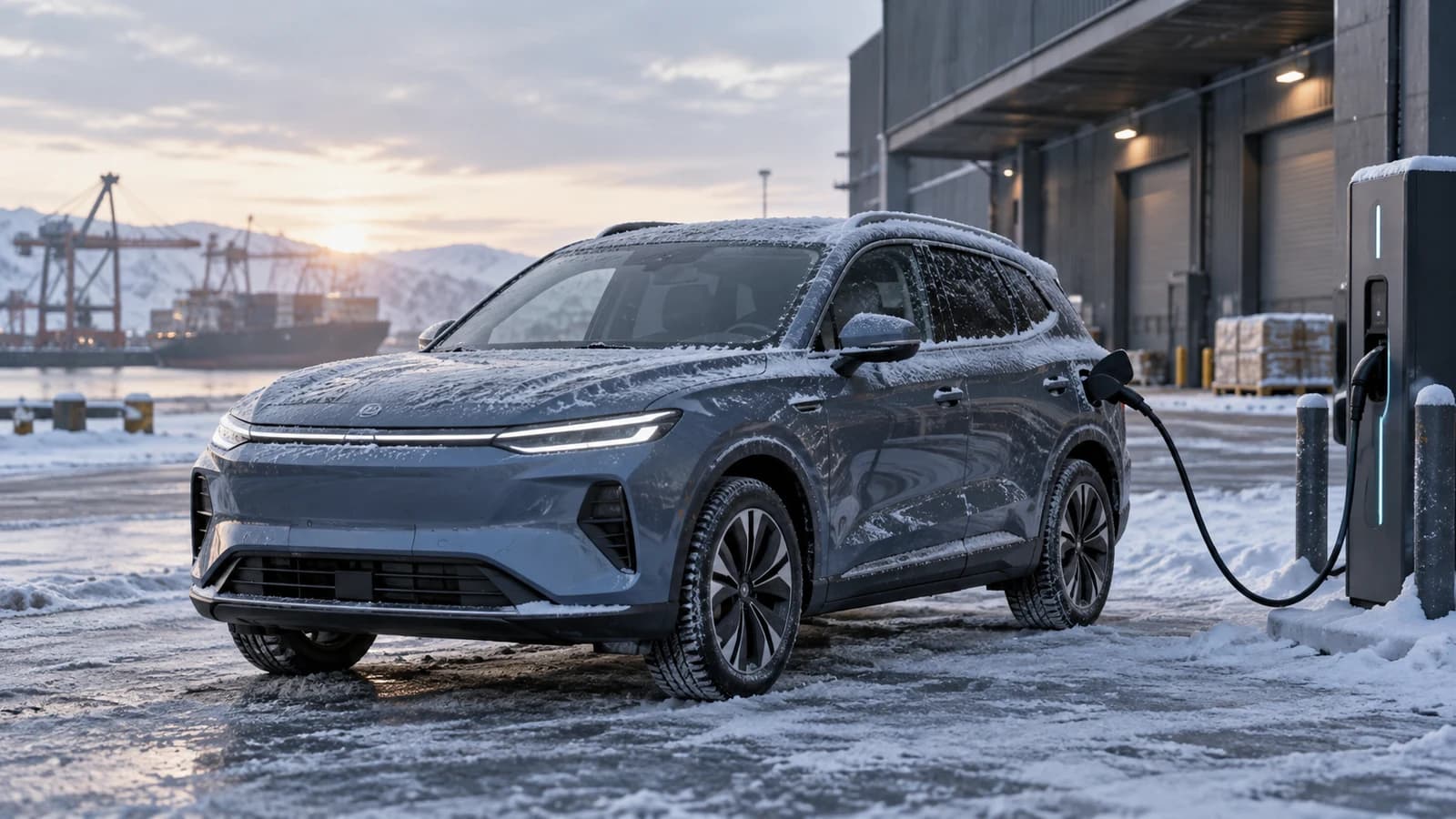
Direct answer. Assess a Chinese EV's cold-weather parking and route suitability through a bounded, manufacturer-supported trial of the actual vehicle and intended use. Record the starting conditions, parking period, charging arrangement and observed journey. Do not apply a universal percentage loss or treat the dashboard estimate as a certified battery-health result.
Key takeaways
- Define the buyer's real parking and travel requirement.
- Use the applicable manufacturer guidance and safe trial conditions.
- Record observations without turning one result into a guarantee.
- Separate battery condition from route and climate suitability.
- Investigate material findings with qualified providers before scaling use.
Describe the cold-weather ownership question
Identify where the car will be parked, for how long and what trip must follow. A private driveway, an unheated depot and a public parking site can present different practical arrangements. Give the competent provider the intended scenario rather than asking whether the car is generally good in winter.
State which conditions are based on actual experience and which are forecasts. If the vehicle has not reached the destination, record that limitation. A seller's demonstration in another climate cannot establish the result of your specific parking and route pattern.
Decide what evidence would make the buyer reconsider the purchase or operating plan. An essential daily journey needs a clearer support arrangement than an occasional optional trip. Define that decision boundary before the trial so an attractive result does not distract from the actual requirement.
Obtain vehicle-specific instructions
Ask for the applicable manufacturer information for the exact model and configuration. Have a competent provider explain the approved parking, charging and preparation arrangements relevant to the trial. Do not copy a numerical target or procedure from another brand's winter advice.
Confirm that the proposed trial is lawful and safe for the vehicle and location. This article does not prescribe electrical work, battery heating modifications or driving maneuvers. Any condition involving warnings, suspected damage or unsafe equipment should be referred to competent assistance rather than tested experimentally.
If a connected function is part of the approved routine, verify its destination support separately. A seller's app demonstration may not establish the new owner's access or regional availability. Keep that dependency visible instead of assuming the trial will work once the car arrives.
Record the trial conditions
| Field | Observation to retain |
|---|---|
| Vehicle | Identified configuration and relevant software baseline |
| Parking | Location, duration and observed environmental conditions |
| Approved routine | Applicable instructions and authorized preparation |
| Starting state | Relevant observed information, labeled as such |
| Journey | Actual route and ordinary use conditions |
| Outcome | Observed result, limitations and professional follow-up |
Use a proportionate record. Do not collect detailed personal location information beyond what the assessment needs. If several vehicles or drivers are involved, identify the comparison method before combining the results into a fleet claim.
Interpret the result without overclaiming
A single successful journey establishes an observation under specific conditions. It does not guarantee the same result under every temperature, load or future battery condition. Record the actual circumstances so that the buyer can understand what the finding supports.
Likewise, a disappointing result needs investigation before a conclusion about the vehicle is made. Ask the competent provider to distinguish operating conditions, charging dependencies, configuration and technical concerns. Do not diagnose battery degradation from a dashboard range estimate alone.
General EV consumer information is background for ownership planning, not a model-specific cold-parking prediction. The purchase assessment needs the applicable manufacturer information and the authorized trial. Avoid publishing a percentage loss presented as universal for all Chinese EVs.
Keep battery condition as a separate question
If battery condition is material to the purchase, request an appropriate qualified assessment with a stated method and scope. A route trial and a battery-health report answer different questions. One should not be used to conceal an unresolved finding in the other.
Record which technical checks were performed and which were not. A seller's broad description that the battery is excellent should not become the conclusion of your test worksheet. The competent provider should identify the basis of any condition finding and its limitations.
For a used vehicle, connect the assessment to the history and inspection evidence. Missing records remain gaps even when a short trial succeeds. The buyer's decision should consider the whole supported ownership arrangement rather than a single reassuring number.
Plan the supported contingency
Identify the approved charging and assistance alternatives if the intended routine cannot be completed. Do not assume every nearby charger is compatible or that any ordinary outlet is a safe substitute. Verify the relevant vehicle, equipment, access and provider instructions.
For a fleet, assign the person who changes dispatch or arranges support when the tested conditions do not hold. Drivers should not improvise electrical or technical changes to preserve a schedule. A winter contingency should have a responsible owner and a bounded supported action.
Use the winter-range planning guide to frame the operating requirement and the battery-health evidence checklist for the technical workstream. The useful conclusion identifies verified conditions, limitations and support, rather than declaring the car winter-proof.
Compare repeated observations carefully
If further trials are appropriate, agree the method with the competent provider before comparing them. Different routes, loads or starting conditions can make a simple ranking misleading. Preserve each observation separately and explain which conditions were comparable rather than averaging unlike trips into one reassuring number. For a fleet, do not expand a finding from one configuration to a different purchased trim without assessment. The repeated record should improve the ownership decision while retaining the limits of the evidence gathered.
Frequently asked questions
Is there one reliable winter range-loss percentage?
This guide supplies no universal percentage. Assess the actual vehicle and supported use under documented conditions with competent advice.
Can a range estimate prove battery health?
No. Treat it as an observed display value and obtain a separate qualified condition assessment where required.
Does one successful cold-weather trip prove year-round suitability?
No. Preserve the trial's conditions and limitations, and investigate the essential operating requirements and contingency separately.
Sources
- U.S. DOE: EV consumer information — general ownership context, not a model-specific winter prediction.
- U.S. DOE: electric vehicle maintenance — general technical support context, not a battery-health threshold.