Imported Chinese EV Keys: Plan a Replacement Route
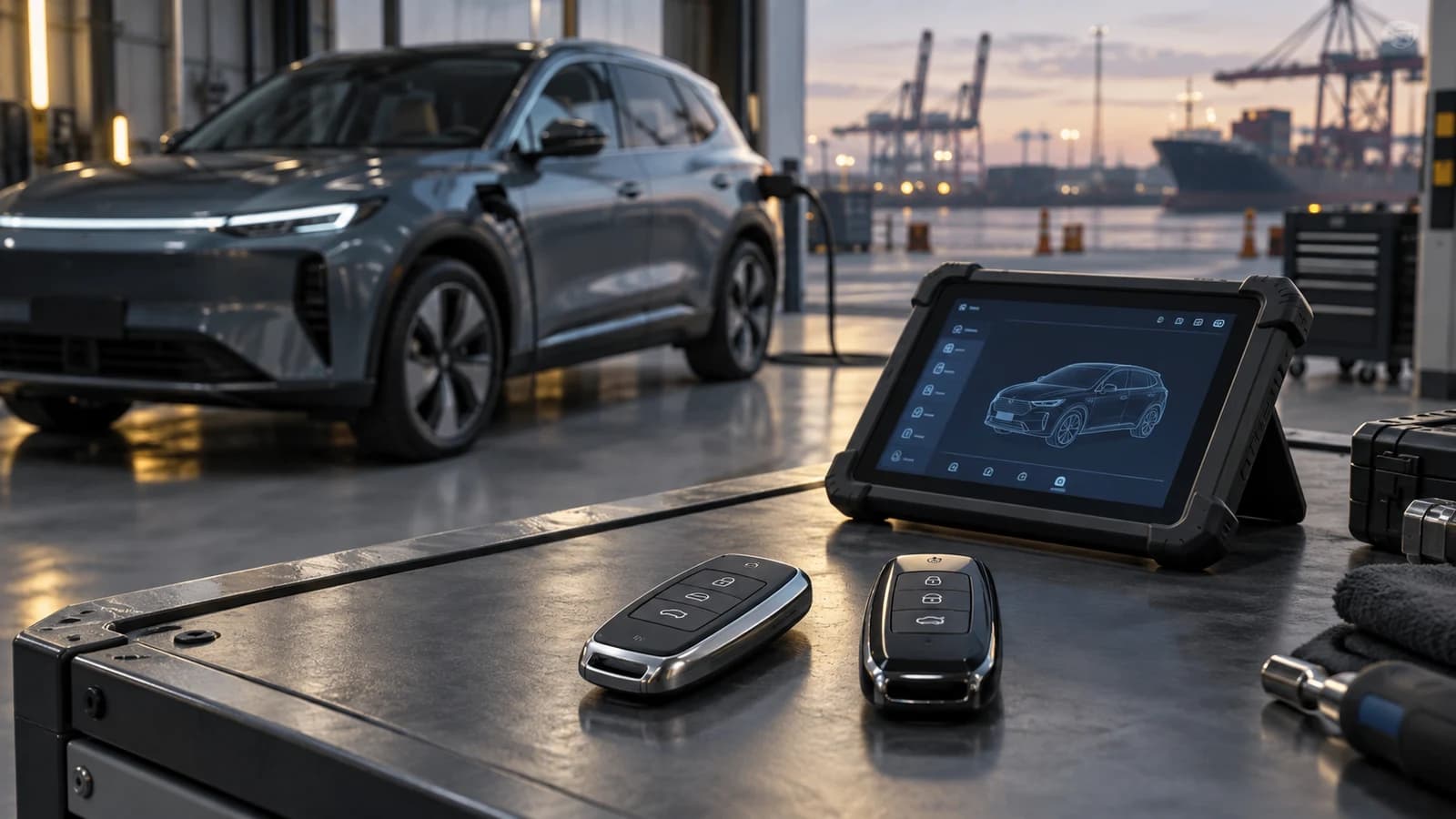
Direct answer. Before importing a Chinese EV, verify the supplied keys and establish an authorized destination-side replacement route. Confirm what physical keys, cards or digital credentials belong to the actual vehicle, who can replace or revoke them and what ownership evidence is required. A spare-looking object is not proof that it works or that previous access has been removed.
Key takeaways
- Inventory each supplied access device against the actual vehicle.
- Test authorized functions using the appropriate instructions.
- Obtain a written replacement route before purchase.
- Separate physical-key access from account and app access.
- Plan loss, damage and previous-owner credential removal.
Start with the delivered access set
Ask the seller to list exactly what will be supplied: physical keys, cards, mechanical emergency components or other approved access devices. Different models and trims can use different arrangements. Do not infer the specification from another market's advertisement or from a generic photograph.
Tie the inventory to the VIN and purchase record. Identify any device that is missing, untested or described as a later delivery. A promise to post a spare after shipment should have an agreed owner, deadline and response if it cannot be supplied.
Use manufacturer-authorized instructions for demonstrations. Check the functions relevant to the intended use with the seller or qualified provider. This article does not offer bypass, programming or security-defeat methods. A failed demonstration should become a documented support question, not an invitation to experiment with access controls.
Verify replacement capability in the destination
Contact a provider that explicitly supports the actual model and configuration. Ask whether it can obtain the correct device, perform the authorized procedure and verify the result. General experience with EVs does not guarantee access to every imported vehicle's security system.
Request the ownership evidence and appointment requirements. Some processes may depend on manufacturer systems, an authorized account or documentation from the origin market. Establish those dependencies before the car leaves the seller rather than discovering them after every working key is lost.
Ask for an indicative lead time and cost with stated assumptions. A quote can depend on the current device count, vehicle condition, parts availability and authorized access. Do not publish a universal replacement price or promise that a local locksmith will always be able to help.
Use a replacement-route worksheet
| Field | What to record |
|---|---|
| Vehicle | VIN, model and relevant configuration |
| Supplied devices | Type, quantity and verified functions |
| Support provider | Named contact and confirmed scope |
| Required evidence | Ownership and authorized account documents |
| Dependencies | Parts, systems access and appointment conditions |
| Loss response | Safe contact route and transport arrangements |
The worksheet is a procurement tool, not a technical authorization. Store sensitive access information securely and share it only with parties who need it for the approved work. Do not attach security credentials to a public listing or broadly circulated freight document.
Separate keys from connected-service ownership
An operational key does not prove that a previous owner has lost remote access. Ask how ownership transfer, shared users, digital credentials and connected accounts are handled for the actual vehicle. The relevant provider should explain which permissions can be removed and what evidence confirms the transfer.
Likewise, an app that opens successfully is not proof that a physical spare is usable. Keep the device inventory and account handover as separate acceptance tasks. If a feature depends on region-specific connected services, record that dependency without assuming it will work after export.
Do not share a previous owner's password as a substitute for an authorized transfer. Ask the seller to complete the correct process and protect any personal data encountered during handover. Where the manufacturer offers no supported destination route, the buyer needs to understand that limitation before accepting it.
Plan the first lost-key incident
Ask who the owner should contact if a key is lost while the vehicle is parked away from home. The response may involve an authorized support provider, insurer or professional transporter. Confirm the relevant arrangement rather than assuming that roadside assistance covers every imported model and every cause of immobilization.
The manufacturer instructions should govern emergency access and handling. Do not try to defeat locks, improvise electrical connections or copy procedures from an unrelated car. If safe access or movement is uncertain, obtain competent assistance and protect the vehicle from further harm.
Decide how employees or household users report a lost device. The responsible owner should determine whether revocation, replacement or other authorized action is needed. A fleet that quietly issues another key without addressing the missing credential may leave an unresolved access problem.
Make the handover verifiable
At collection, reconcile the agreed list with the devices actually received. Record demonstrated functions, unresolved items and the person responsible for completing them. Keep evidence proportionate: a signed inventory and authorized confirmation can be more useful than a video exposing sensitive security information.
The U.S. Department of Energy's maintenance guidance reinforces the need for manufacturer-specific support; it does not certify a replacement route for an individual Chinese EV. UK import guidance similarly concerns vehicle-import stages, not key-programming authorization. Neither source should be represented as approval of a seller's proposed workaround.
Use the software and region checklist to identify connected dependencies and the delivery acceptance guide to record the physical handover. Proceed with a clear support route or an explicitly understood limitation, not an untested assumption.
Separate the spare from the daily device
Decide who holds the spare and how its availability will be checked through authorized use. Leaving both devices with one employee or in one location can defeat the intended contingency. For a fleet, keep a controlled issue record and an approved process when a driver changes. Avoid recording security codes in the same ordinary register; the record should establish custody without exposing access secrets.
Frequently asked questions
Does a working app mean I do not need a spare key?
Not necessarily. Verify the manufacturer's supported access arrangements and what happens if the phone, account or connected service becomes unavailable.
Can any locksmith make a replacement?
Do not assume so. Ask an authorized, competent provider to confirm support for the exact vehicle and the required evidence before purchase.
Is receiving the previous owner's login a valid transfer?
It is not a substitute for the supported ownership process. Ask how prior permissions are removed and the new owner's access is established.
Sources
- U.S. DOE: electric vehicle maintenance — manufacturer-specific support context, not key replacement instructions.
- GOV.UK: importing vehicles — UK-specific import context; not access-system authorization.