Chinese EV Shipping Damage: Preserve Claim Evidence
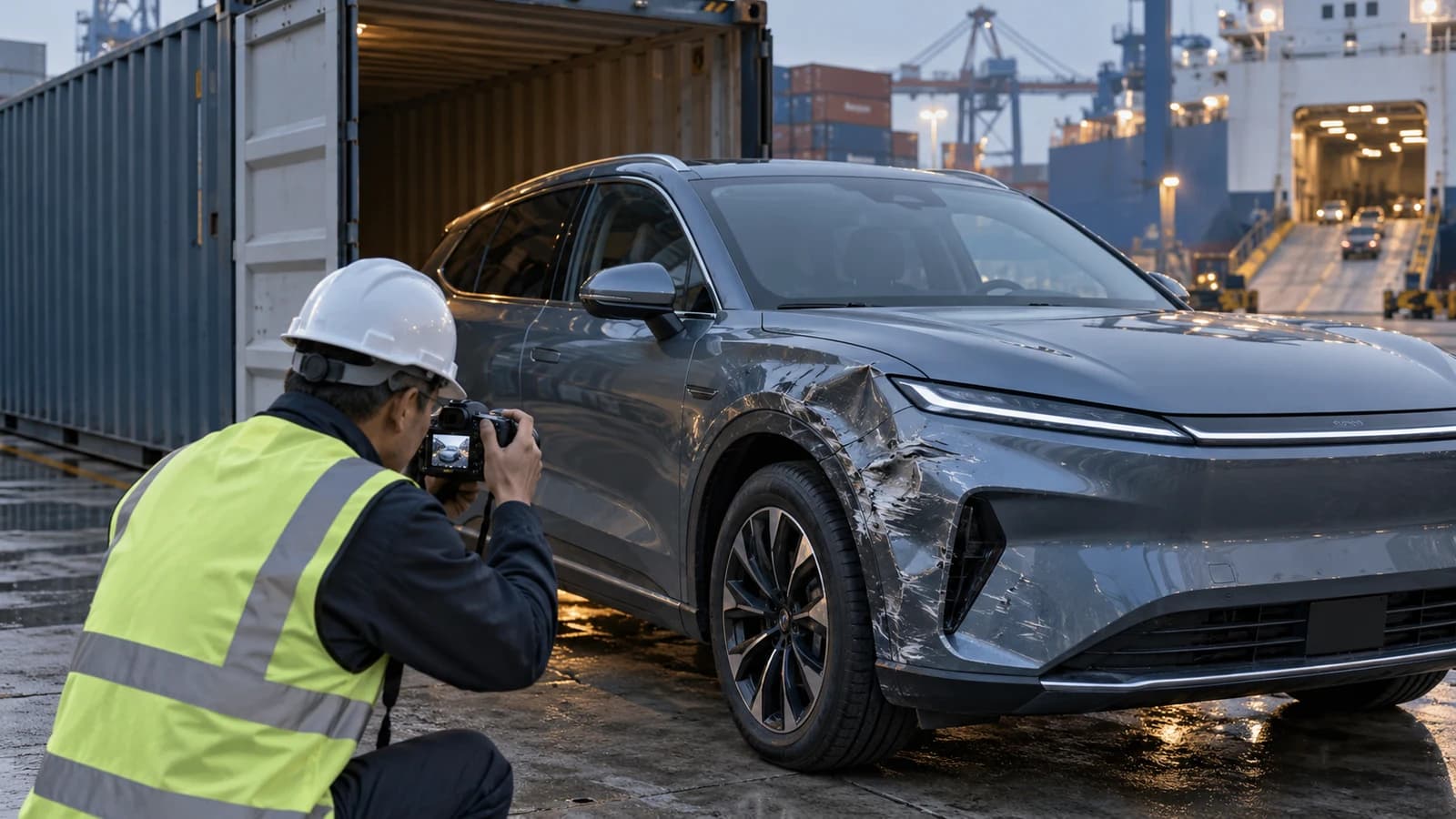
Direct answer. If an imported Chinese EV arrives with suspected transit damage, prioritize safety, notify the authorized parties promptly and preserve a traceable condition record. Photographs are useful, but a claim also needs the vehicle identity, shipment documents, delivery observations and the actual insurer or carrier process.
Key takeaways
- Do not drive, charge or inspect a potentially damaged battery without qualified guidance.
- Record the condition before unauthorized cleaning or repair changes the evidence.
- Keep vehicle, shipment and delivery references connected.
- Notify the relevant parties through their actual contractual process.
- Separate what you observed from assumptions about when or why damage happened.
Safety comes before collecting pictures
An EV with suspected battery or high-voltage damage requires qualified handling. If there is smoke, abnormal heat or another immediate concern, follow the applicable emergency instructions and contact the appropriate professionals. Do not open the pack, reconnect damaged equipment or charge the vehicle to prove whether it still works.
The U.S. Department of Energy's maintenance and safety guidance discusses high-voltage systems and manufacturer emergency information. It provides general safety context, not a diagnosis of your Chinese EV or a substitute for the exact vehicle's instructions. Obtain the relevant manufacturer and local professional guidance before handling a damaged car.
Avoid placing people in danger to obtain a better photograph. Authorized terminal or workshop personnel may need to secure the area first. Record that a particular view could not be obtained safely rather than improvising a technical inspection. Evidence collection should not create a second incident.
Establish the first condition record
Identify the vehicle, delivery location and time of observation. Keep the shipment and container references where relevant. Note who was present and which handover record was issued. If several vehicles share a shipment, make sure each photograph and damage description belongs to the correct vehicle rather than to the batch generally.
Describe visible facts without diagnosing them. A cracked lamp, dented panel or wet interior can be recorded directly. The statement that a battery is electrically safe, or that corrosion proves a particular date of exposure, requires expertise and evidence beyond a buyer's visual observation.
Where the authorized delivery process permits, record relevant exceptions on the receipt and retain the confirmed copy. Ask the responsible provider how observations should be documented. Do not falsify a delivery record or assume that one general phrase satisfies every contract, policy or jurisdictional requirement.
Build a claim evidence index
| Evidence item | What it should identify |
|---|---|
| Purchase record | Vehicle and commercial value information |
| Transport record | Booking, document and relevant shipment references |
| Handover record | Date, location and observed delivery condition |
| Photographs | Vehicle identity, overview and specific observed area |
| Expert assessment | Qualified findings and their limitations |
| Correspondence | Notification, instructions and approved next steps |
Keep original files and a working index. Heavy editing can remove timestamps or context, and a compressed messaging copy may not preserve the original detail. If you make a cropped copy to explain an issue, retain the unaltered original and make the relationship clear.
The index is a preparation aid. The actual claimant, insurer or carrier determines the documents it needs and the process it accepts. A complete-looking folder does not guarantee coverage, establish liability or determine the amount recoverable.
Notify before deciding the claim yourself
Contact the parties identified in your policy and transport arrangements. Ask what immediate notification, inspection and preservation steps apply. Maersk's cargo-insurance page provides a published example of prompt notification and supporting documentation. Other policies or carrier claims can have different conditions; use the actual contract rather than a general deadline from an unrelated route.
State what is known and what remains uncertain. Include the shipment reference and a concise description of the observations. Do not assert a cause simply because the vehicle looked undamaged in one departure photograph. The photograph's scope, timing and the handover chain still need examination.
If a seller, forwarder or other party offers to handle the claim, confirm its authority and what information it will submit. Keep the buyer informed through a traceable process. Do not assume that an informal promise to 'take care of it' means the insurer has received a valid notification.
Ask before repair or disposal
Repairs, cleaning and replacement can change evidence. Obtain the relevant instructions and professional advice before proceeding beyond necessary safety measures. The insurer or responsible party may request an assessment, estimates or preservation of affected components. Do not retain dangerous material in an unsuitable location merely to preserve evidence.
Ask how safety-related work and ordinary repair estimates should be documented. Separate urgent measures from cosmetic improvements or unrelated maintenance. A repair invoice should identify the work actually performed; it is not proof that every item resulted from the same transit event.
For a severely damaged vehicle, also check destination registration eligibility before planning restoration. Official UK import guidance includes conditions relating to damaged vehicles. That is a UK example, not a universal rule or permission to rebuild an imported car in another market.
Reconcile the proposed outcome
If the claim process produces a repair, replacement or financial offer, have the qualified parties review its scope. Ask what happens to warranty, inspection and road-use conditions after repair. An accepted claim does not automatically establish that the vehicle is safe or eligible for registration.
Preserve the final assessment and authorized repair records. The buyer may need them for future maintenance, resale disclosures or another professional inspection. Requirements vary, so do not present this checklist as the complete legal record for every destination.
Use the cargo-insurance guide to review policy assumptions, and the delivery-acceptance checklist to plan evidence before arrival. Preparation makes it easier to describe the event without inventing facts after a problem appears.
Frequently asked questions
Should I charge the car to check whether it is damaged?
Not when battery or electrical damage is suspected. Use qualified manufacturer-specific guidance and applicable safety procedures rather than a buyer-led experiment.
Do photographs prove the carrier caused the damage?
Not by themselves. They document observed condition within a particular scope. Cause, timing and liability require the relevant evidence and professional process.
Does cargo insurance guarantee payment for any damage?
No. Coverage, exclusions, documentation and claim handling depend on the actual policy and circumstances.
Sources
- Maersk: cargo insurance and claim checklist — one published insurer-process example, not your coverage determination.
- U.S. DOE: EV maintenance and safety — general safety context; vehicle-specific and local professional instructions still apply.
- GOV.UK: vehicle approval for imports — jurisdiction-specific damaged-vehicle context.