Chinese EV Fleet Handover: Train Drivers for Exceptions
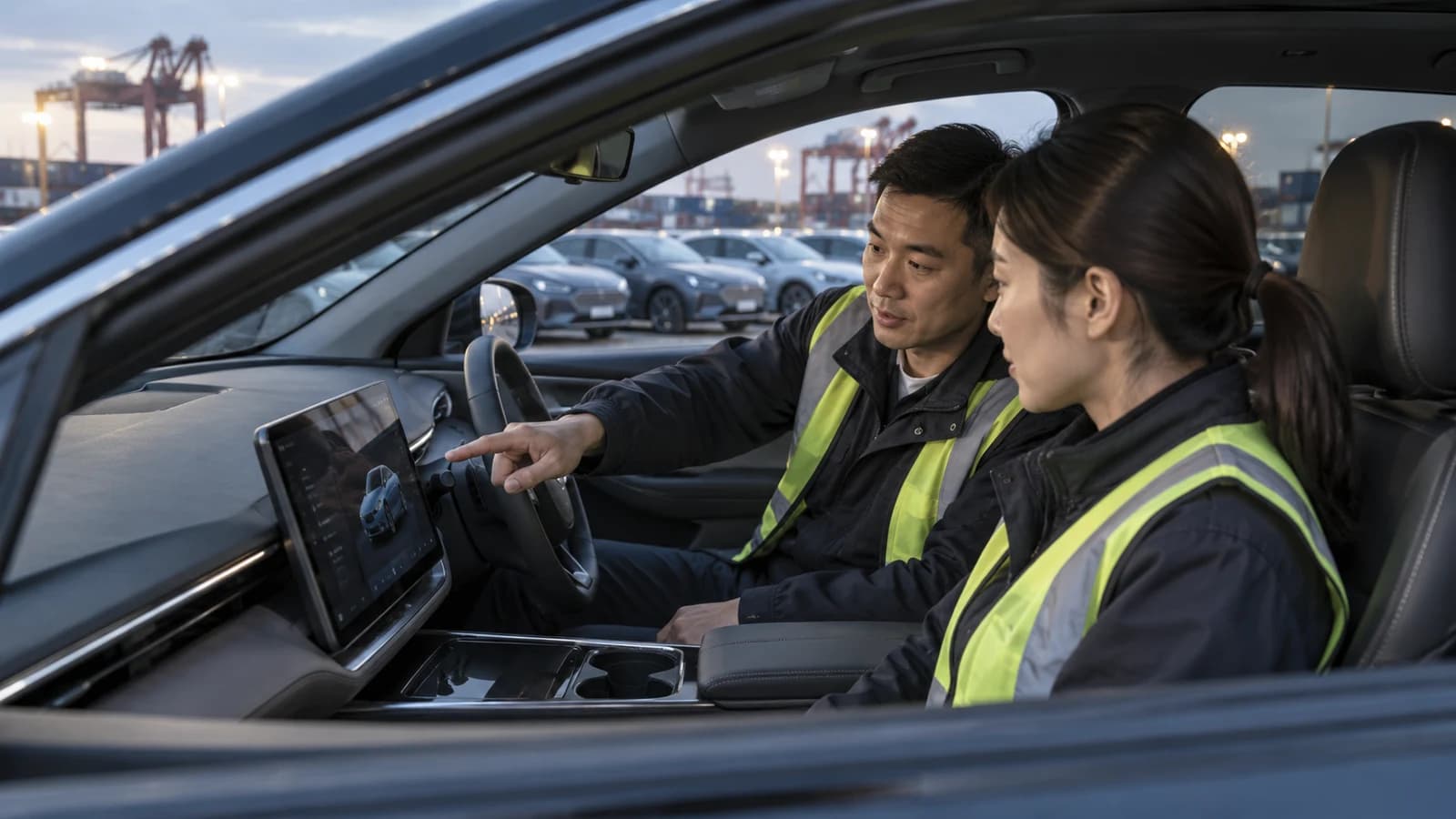
Direct answer. Train Chinese EV fleet drivers for the actual vehicle and the exceptions in their operating day, not only a successful showroom journey. Use applicable manufacturer instructions and qualified support for charging, warnings and roadside situations. Assign a clear escalation owner and verify that each driver can follow the approved process without improvising technical work.
Key takeaways
- Base training on the delivered configuration and approved instructions.
- Separate routine use from situations requiring professional assistance.
- Practice reporting and escalation without creating real hazards.
- Include charging access, keys and shared-account responsibilities.
- Record demonstrated understanding and unresolved support limitations.
Define the driver's actual responsibility
List the tasks drivers are expected to perform and the tasks reserved for qualified personnel. Ordinary vehicle use, reporting a warning and contacting support have different boundaries from electrical diagnosis or repair. Make those boundaries explicit before the fleet enters service.
Identify the exact configuration being delivered. A training deck built around a different trim or local-market version can misdescribe controls and services. Ask the competent provider to supply or verify the applicable instructions and identify any features that are unsupported after export.
Choose a language and format that drivers can use reliably. A translated summary should be checked against the applicable instructions rather than created from memory. Keep the relevant owner information accessible at the point of use without expecting a driver to search a long procurement email thread.
Teach the routine before the exceptions
An authorized routine demonstration should cover the approved tasks needed for the operating day. Ask the trainer to explain the relevant manufacturer instructions, not to invent a universal EV procedure. Record which actual configuration and equipment were used.
Keep the demonstration lawful and safe. This guide does not prescribe driving maneuvers, emergency-response techniques or battery handling. The appropriate qualified provider should select the training method and refuse exercises that would create unnecessary risk.
If a driver cannot complete a required routine task, investigate whether the issue is instructions, language, account access, equipment or an unsupported function. Repeating the same explanation may not resolve a missing service dependency. Keep those findings separate so the fleet owner can choose the right action.
Build an exception matrix
| Situation | Driver's approved next step |
|---|---|
| Charging session unavailable | Use the operator and fleet escalation process |
| Vehicle warning or unusual condition | Follow applicable instructions and contact competent support |
| Key or account access missing | Report the credential issue to the assigned owner |
| Route or schedule changes | Ask dispatch to use the approved contingency |
| Suspected damage | Preserve safe observations and obtain professional direction |
| Service outage | Follow the supported business-continuity arrangement |
Each row needs an identified contact and a clear limit on what drivers may do themselves. Avoid a vague instruction to troubleshoot until the issue is resolved. A driver should not become the default electrical technician because the support contact is unavailable.
Practice escalation without manufacturing a hazard
Use tabletop scenarios or a trainer's approved simulation. Ask the driver to identify the relevant instruction, report the situation and contact the correct owner. The exercise should test understanding without intentionally damaging equipment or causing a real unsafe condition.
Record what information support needs: vehicle identifier, location, relevant observation and the sequence of events. Avoid collecting unnecessary personal details. Drivers should know how to describe an observed warning without making an unsupported technical diagnosis.
If a scenario exposes a missing contact or unavailable service, treat that as an operational defect. Training cannot compensate for an unsupported imported model or an incomplete infrastructure arrangement. The fleet owner must resolve the dependency or adjust the intended use.
Include keys and shared services
Define who controls physical keys, authorized app access and charging accounts. Explain the supported process for lost devices, staff changes and delegated permissions. Do not encourage drivers to share a primary owner's credentials to make shift changes easier.
The account owner should maintain the appropriate permission and recovery arrangements. A driver's personal phone should not silently become the only access route for the fleet. Use the relevant providers' supported procedures and keep sensitive credentials out of training screenshots.
Explain which services remain dependent on regional availability or subscription conditions. Drivers need a truthful operating boundary, not a promise that every feature in a marketing video will work. A changed service condition should trigger an updated briefing and an appropriate operational review.
Assess readiness before scaling the fleet
Define how the trainer verifies understanding of approved tasks and escalation. A signed attendance sheet shows attendance; it does not by itself establish readiness. Record the observed result and any follow-up training or support action required.
NHTSA's EV and emergency-response resources provide U.S. safety context and manufacturer-supplied reference material where available. They do not provide one training procedure for every Chinese-market configuration. Use the relevant vehicle-specific instructions and qualified local support as the operational basis.
Use the fleet pilot guide to keep the rollout bounded and the software-region checklist to identify service limitations. Expand only when drivers, support owners and equipment arrangements can handle the exceptions that the pilot actually reveals.
Update the briefing after real exceptions
Review an actual incident with the responsible support owner once immediate safety needs have been addressed. Ask whether the approved instructions were clear, the contact was reachable and the driver had the required authorized access. Separate a support-system failure from a training gap instead of automatically blaming the driver. Where the process changes, issue a current briefing and verify the relevant understanding. Keep the exercise focused on documented events, not on an invented account of what the vehicle must have been doing internally.
Frequently asked questions
Is a short showroom drive sufficient fleet training?
No. Cover the approved daily tasks, service dependencies and exception escalation for the actual operating environment.
Should drivers learn battery repair as a contingency?
No. Keep technical work within qualified, authorized roles and use the applicable professional assistance route.
Does attendance prove a driver is ready?
It proves attendance. Verify understanding and supported task performance using a safe method chosen by the competent trainer.
Sources
- NHTSA: electric and hybrid vehicles — general U.S. safety context.
- NHTSA: emergency response guides — vehicle-specific resources where available; not universal fleet instructions.