Chinese EV Child Seats: Verify Fit Before Purchase
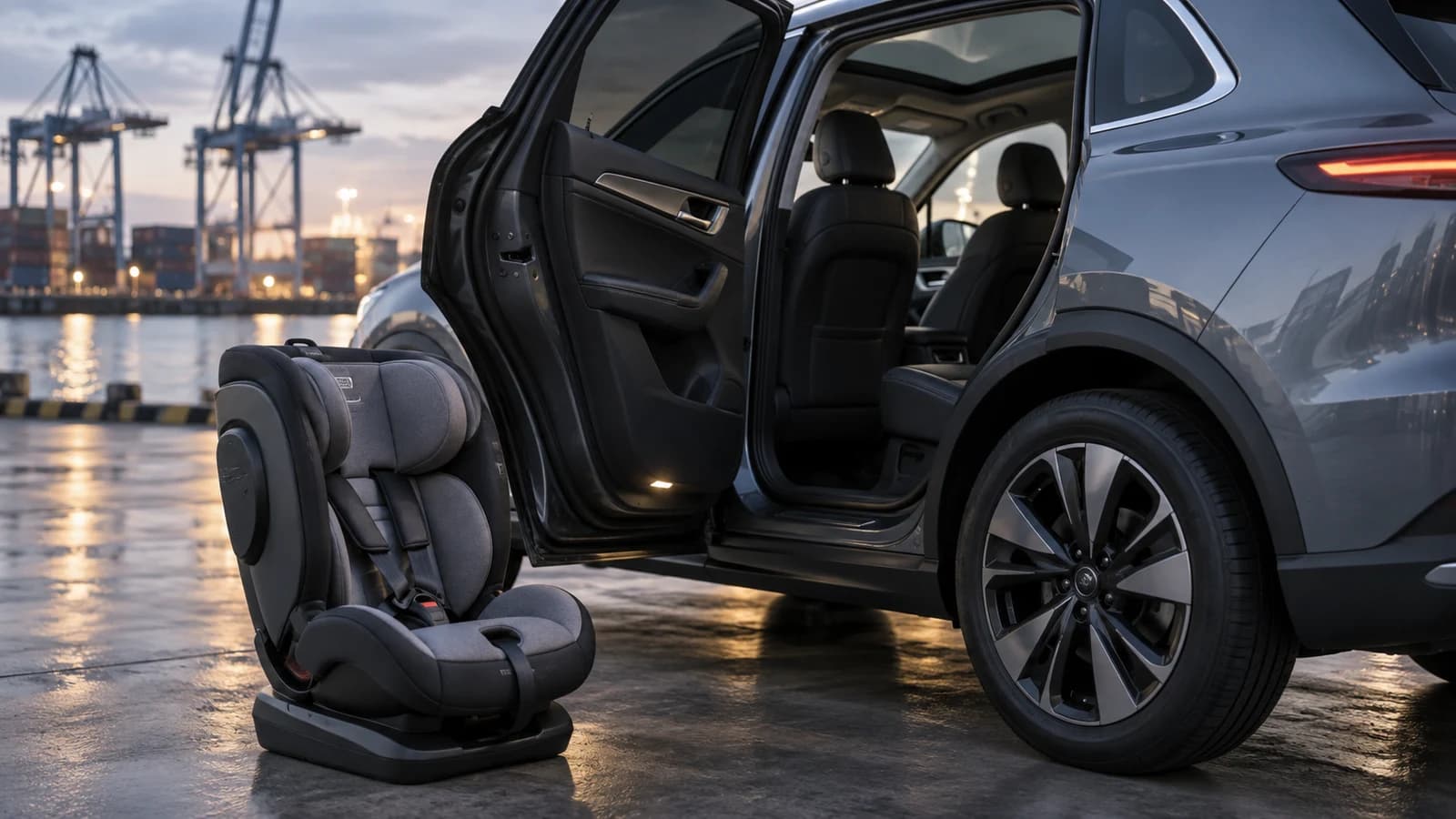
Direct answer. Verify a child seat against the actual Chinese EV, the seat manufacturer's instructions and the destination requirements before purchase. Ask an appropriately qualified child-passenger-safety provider to assess the intended combination where available. A visible anchor, spacious rear seat or generic compatibility claim does not establish a correct installation for your child and equipment.
Key takeaways
- Select equipment appropriate to the child and the applicable rules.
- Obtain both the vehicle and child-seat instructions.
- Verify the intended seating position on the actual configuration.
- Arrange a competent fit assessment rather than relying on a photograph.
- Recheck the arrangement when the child, seat or vehicle configuration changes.
Describe the family requirement before choosing the car
State how many children and seats must travel together, which equipment is intended and what other passengers or luggage must be accommodated. The point is to define the actual use, not to rank vehicles by a brochure's rear-seat width.
Avoid sharing unnecessary personal details with suppliers. A qualified provider can explain what information is needed to assess the seat and child requirements. Keep the purchase discussion focused on the equipment, seating arrangement and relevant constraints rather than circulating a child's personal records.
Do not assume that a large SUV will necessarily suit every seat combination. A configuration with enough apparent space can still present an installation or access question. Resolve those questions while you can still choose a different vehicle or supported arrangement.
Obtain the two applicable instruction sets
The child-seat manual and the vehicle manual serve different purposes. Ask for the information applicable to the actual seat model and Chinese EV configuration. A translated sales summary is not a substitute for the relevant manufacturer instructions.
NHTSA's child-seat guidance advises selecting a seat appropriate to the child that fits the vehicle and consulting both manuals. Its U.S. information does not establish the legal requirements of every destination. Obtain the applicable local rules and professional advice for your family and equipment.
If the instructions conflict or a required detail is unclear, stop and ask the relevant manufacturer or qualified provider. Do not choose the interpretation that merely makes the equipment appear to fit. This article is not an installation manual and supplies no universal fastening procedure.
Verify the actual seating position
Ask the competent provider to assess the intended position and configuration, not just a similar demonstration vehicle. Record the vehicle identity, seat model and the scope of the assessment. A conclusion about one seating position should not be extended to every position in the car.
Have the seller confirm whether upholstery, seats or other relevant equipment will change before delivery. If an arrangement was checked on a different interior configuration, the finding may not describe the imported car. Keep that distinction visible in the purchase file.
Do not improvise anchor extensions, belt routing or modifications to make an unsupported combination work. The appropriate instructions and competent assessment govern the arrangement. If the car or seat cannot meet the verified requirement, reconsider the selection rather than hiding the issue behind a spacious interior photograph.
Build a fit-assessment record
| Field | Record to preserve |
|---|---|
| Vehicle | VIN, configuration and relevant manual |
| Child seat | Identified model and applicable instructions |
| Intended position | The exact arrangement assessed |
| Provider | Qualified contact and assessment scope |
| Result | Supported arrangement and limitations |
| Change trigger | What requires a further review |
The record should not claim a crash-performance certification unless an appropriately authorized source actually supplies one. A practical fit assessment has a defined purpose and scope. Preserve that scope so a later buyer or caregiver does not mistake it for a broader technical guarantee.
Check daily usability within the supported arrangement
Once the competent provider has established the supported configuration, consider ordinary access and handover needs. Can caregivers understand the applicable instructions and use the arrangement consistently? Are the relevant documents available in a language they can use reliably?
Consider the planned passenger and luggage combination without exceeding the vehicle's applicable instructions. A purchase demonstration should not involve unsafe experimentation with a child or an unsupported installation. Use the provider's approved method for any practical assessment.
For several caregivers, define how the arrangement is checked after a seat is moved or another vehicle is used. Do not assume that a successful assessment in one car automatically carries over to a second car. The equipment and configuration should be reviewed on their own terms.
Separate family fit from import approval
Vehicle approval and child-seat suitability are different decisions. UK vehicle-import guidance, for example, describes an approval process for the car. It does not confirm that your chosen seat fits the identified vehicle or settle the rules of another destination.
Ask the relevant destination advisers about any import or equipment requirements before shipping. If a needed seat or support provider is unavailable locally, factor that into the purchase decision. An unresolved family-use requirement can make an otherwise attractive vehicle unsuitable for its intended role.
Use the pre-shipment inspection guide to identify the actual configuration and the delivery acceptance checklist to confirm that the delivered equipment matches the assessed arrangement. Keep the child-seat instructions with the ownership materials, not only in the procurement email thread.
Keep the configuration current
Record when the seat was moved, replaced or assessed in another vehicle, and ask the competent provider which checks should follow. A caregiver should not rely on an old fit note without confirming that it describes the current arrangement. Keep the applicable instructions available to everyone who uses the seat, while sharing only the personal information necessary for the task. The record should support consistent care, not create an unnecessary public family profile.
Frequently asked questions
Do visible anchors guarantee that my seat will fit?
No. Verify the specific seat, seating position, vehicle instructions and destination requirements with the appropriate provider.
Can a supplier photograph replace a fit assessment?
No. Photographs can identify questions but cannot establish every installation condition or support a broad safety conclusion.
Must the arrangement be reviewed after changing seats?
Treat a new seat or materially changed configuration as a new compatibility question. Ask the competent provider which reassessment is required.
Sources
- NHTSA: car seats and booster seats — U.S. child-passenger guidance; consult the applicable destination rules.
- GOV.UK: vehicle approval for imports — UK-specific vehicle approval, not seat-fit certification.