Chinese EV Accident Repairs: Ask for Evidence
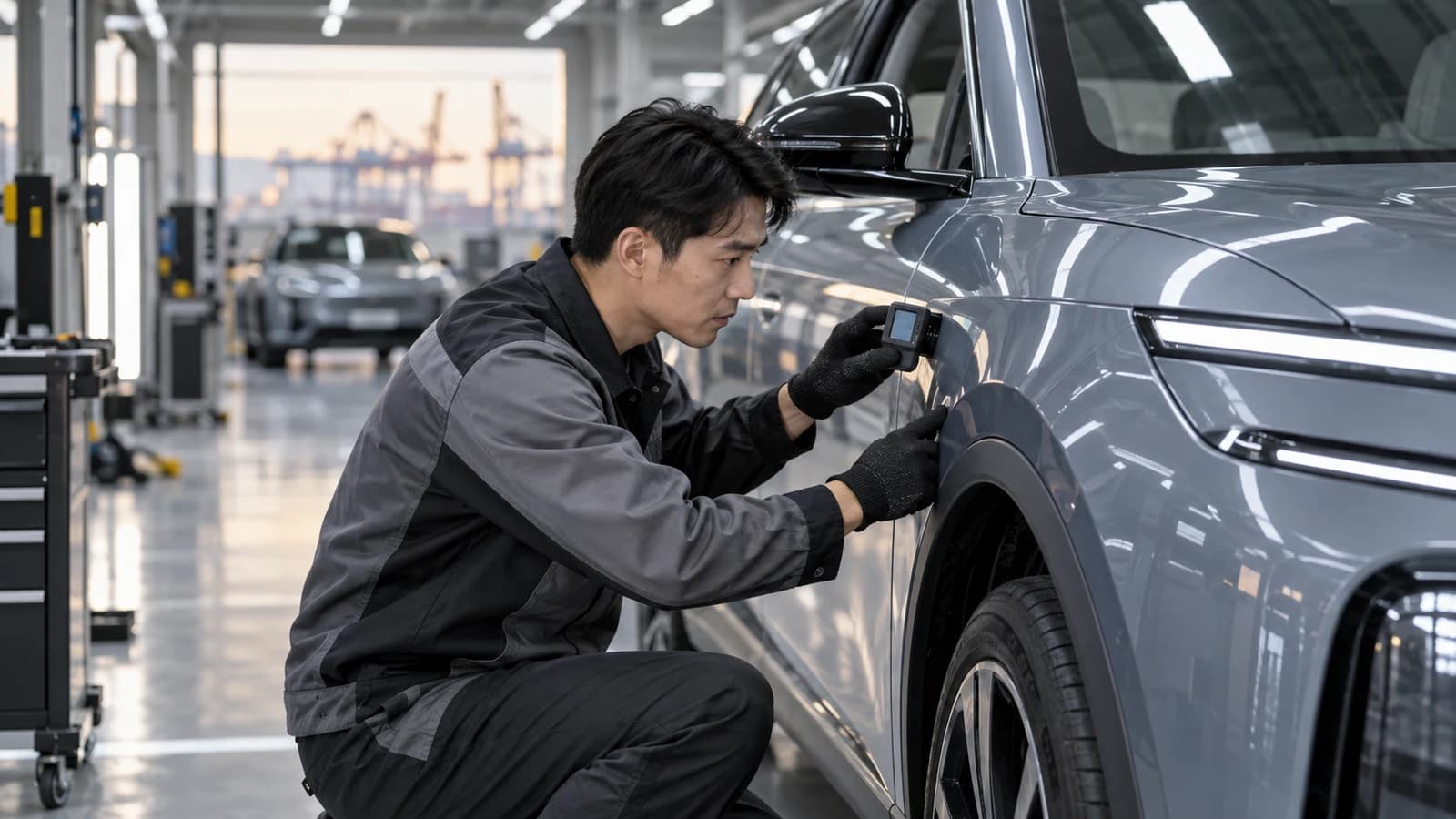
Direct answer. Ask for an accident-repair evidence package before purchasing a used Chinese EV: the identified vehicle, disclosed damage, repair scope, component records and qualified post-repair findings. A polished exterior or an invoice saying repaired cannot establish structural condition, restraint-system readiness or high-voltage safety. Treat missing records as an unresolved purchase risk.
Key takeaways
- Distinguish a seller's disclosure from an independent finding.
- Tie repair documents to the VIN and the actual work dates.
- Ask qualified specialists about structural, restraint and EV-specific checks.
- Confirm destination eligibility independently of workshop repairability.
- Preserve changes between inspection and shipment in the delivery record.
Reconstruct the event without inventing certainty
Start with the seller's account of what happened and when. Ask which areas were affected, whether the vehicle was operational afterward, and what records exist. A vague statement about minor damage does not give an inspector enough information to plan the assessment.
Request original photographs and work records where they are available through authorized channels. Label the source of every item. A supplier's summary is useful for navigation, but it should not replace the original evidence or present an unverified description as a workshop conclusion.
Some records may not exist or may not be accessible to the buyer. State the gap plainly. Do not infer that no disclosed accident means no accident occurred. The inspection scope should account for the available information and explain how missing history limits the conclusion.
Separate the repair invoice from the technical finding
An invoice can show that a provider billed for particular work. It may not establish the damage originally present, the authenticity of every installed part or the result of the final checks. Ask for the work scope and the relevant authorized verification rather than relying on the invoice total.
Record the provider, dates, parts identification where appropriate, and the vehicle identity used on the documents. Resolve unexplained differences before purchase. A document relating to another vehicle or a differently configured variant cannot substantiate this car's repair.
Ask the independent inspector to describe what it observed directly and what it relied on from third parties. A report that clearly separates those sources is more useful than a broad assurance without a method. Have qualified advisers review material discrepancies and the proposed contractual response.
Organize the inspection by consequence
| Area | Question for a qualified provider |
|---|---|
| Body and structure | What was repaired, measured and checked? |
| Restraint systems | Which authorized checks support readiness? |
| High-voltage components | Was relevant damage assessed by an EV specialist? |
| Sensors and assistance features | Are applicable calibration or validation records available? |
| Charging equipment | What condition and functional checks were appropriate? |
| Destination paperwork | Could the disclosed repair affect approval or registration? |
This table defines evidence questions, not a DIY inspection procedure. Do not dismantle safety equipment, access the battery pack or test a warning condition merely to complete the worksheet. The qualified provider should select the correct manufacturer-specific method.
Treat EV-specific damage as its own workstream
General maintenance guidance from the U.S. Department of Energy directs owners toward relevant manufacturer information and professional servicing. It does not provide a universal pass condition for a repaired battery-electric vehicle. Ask whether the disclosed event requires a specialist assessment beyond the ordinary visual report.
NHTSA's electric and hybrid vehicle safety information describes hazards associated with damaged high-voltage systems. Its emergency guidance is not a repair manual for every Chinese EV. Obtain the correct instructions and professional advice for the actual model and condition.
A functioning display, quiet test drive or successful charge cannot by itself answer every post-accident question. Avoid accepting a demonstration as a substitute for the relevant assessment. Where a competent professional identifies a safety concern, stop operations and follow that professional's direction.
Check destination consequences before shipping
Import approval is separate from a workshop's statement that the repair is complete. Ask the destination authority or qualified adviser how the disclosed condition and available records affect the planned route. Do not assume that an export document proves road-registration eligibility.
For example, UK government guidance describes vehicle approval and registration requirements for imported vehicles. That guidance does not pre-approve an individual repaired car. A buyer importing elsewhere needs the relevant local rules and vehicle-specific advice rather than a copied UK checklist.
Share accurate, authorized condition information with insurers and transport providers. Ask which disclosures or documents they require for their own decisions. An insurance quote or cargo booking may contain conditions that still need to be satisfied before cover or transport acceptance applies.
Agree what happens if the evidence changes
The purchase agreement should identify the documents and inspection findings relied on, with qualified advice on any material representations or remedies. Do not assume that describing a car as accident-free creates the same protection in every transaction or jurisdiction.
If repairs occur after your inspection, request the new records and determine whether a repeat assessment is necessary. A report issued before later work may no longer describe the vehicle being delivered. Preserve the earlier version so that the change can be understood.
At handover, compare the vehicle identity and visible condition with the accepted evidence package. Record discrepancies through the agreed process without attempting unsafe investigation. The vehicle-history guide helps organize provenance, while the delivery acceptance checklist helps preserve the final handover boundary.
Frequently asked questions
Does an expensive repair invoice prove a good repair?
No. Price and technical outcome are different facts. Ask for the scope, relevant verification and an independent assessment within its stated limitations.
Can a general inspection certify every safety system?
Not necessarily. Clarify which systems the provider can assess and which require specialist or manufacturer-authorized work. Do not broaden the report's conclusion yourself.
Should I reject every vehicle with a disclosed repair?
That is a transaction-specific decision. Assess the documented condition, unresolved risks, destination eligibility and support with qualified professionals rather than using a universal rule.
Sources
- U.S. DOE: electric vehicle maintenance — general maintenance context, not post-accident certification.
- NHTSA: electric and hybrid vehicles — safety context for high-voltage vehicles.
- GOV.UK: vehicle approval for imports — UK-specific approval information.